Showing posts with label historical fiction. Show all posts

Wednesday, July 9, 2014

PAST LIVES

by Kathy Cannon Wiechman

In Jack Gantos’ Newbery-winning novel, DEAD END IN NORVELT, a character says, “…most people think history has to be about a big event like a catastrophe or a moment of divine creation, but every soul is a book of their own history… Sadly, we don’t know the history of every person who ever lived…”
This sentiment is why I write historical fiction, and why I write the kind of historical fiction I write.

Millions of real people have lived on this earth in ways that were barely noticed. Some would have stayed unnoticed if their skeletons had not been unearthed thousands of years later and studied. Paleontologists and archeologists can tell us about long gone people by their remains and artifacts they left behind.
The more recent past has been recorded and handed down to us. We read about famous inventors and their inventions. We learn about generals, kings, and presidents, artists and writers, and even outlaws and criminals.

But what about “average” people? People who struggled through their everyday lives, fighting their own personal battles, living their own dramas, but not “making history” by their actions.
We might have heard stories passed down by our parents and grandparents. We can pass those stories on to our own children and grandchildren, stories that get a little less firm in our memories as time fades them. And what about those who don’t have progeny to tell their stories to? Are their stories lost forever?

I research the way people lived in the last two hundred or so years. I listen to stories handed down by families, including my own. I create fictional characters, whose lives are a mixture of many real-life people, people whose stories haven’t been recorded in history books. I write fictional stories that COULD HAVE happened to people. It is my way of trying to make their lives live on, to have meaning for a new generation of readers.

Wednesday, October 16, 2013

When Luck Finds You

Guest post by Sandra Neil Wallace
Author Sandra Neil Wallace

In the mid 1990s, long before I met my husband or knew I’d become a writer, I spent my spare time in a musty historical society near an ice cream parlor in Jerome, Arizona—a town that was once the richest mining community in America.

I was working as an ESPN reporter covering WNBA games in Phoenix and horseracing events in the east—which made for five years of cross-country plane trips four times a week. But the truth was, all I really wanted to do was write, and those times spent at the historical society became my lifeline, as I forged my way from TV to writing.

The problem was, I still hadn’t found a story. Then one day, the archivist told me of a box that had been donated to the society. On the top layer were yearbooks and snapshots of people picnicking in the Gulch one hundred years ago, but then dozens of letters tumbled out—all written by young men to the principal of Jerome High School. The poignant letters were mostly written by Mexican-Americans and spanned nearly three decades, from 1930 up to the Korean War. Some were written from the bunks of battleships on their way to Iwo Jima, while others spoke of segregation in the town of Jerome itself. I stayed up all night reading those because I knew they were too important to let go of.

But no matter how dire the letters were, they always signed off with hopes of a Muckers football victory. So I connected the yearbooks to the local papers and the local papers to the state papers, and discovered an incredible sports story—the 1950 Jerome Muckers fought through impossible odds including racial tensions, the closing of the mine, and playing on a rock field (there is no lawn in Jerome), to vie for a state championship.
Jerome Muckers

I feverishly began writing my historical novel Muckers, creating characters inspired by those letters and my own time in Jerome. I read old newspapers on the streets where I imagined my characters lived, trekked into the Barrio and spent nights in frigid temperatures to get a feel for living in walls so paper-thin, they were no match for the desert wind. I wrote chapters sitting on the ledge of the once-segregated swimming pool, drained long ago.

The players still living from that 1950 team helped me discover what it was like to play on that final football squad. I wrote much of the novel in their abandoned high school and on the rock field itself. (Now a parking lot.)

Writing historical fiction takes on a much deeper meaning when it’s based on a true team and a town, but it also made crafting my own characters and weaving so many crucial socio-political elements, challenging. And I kept relying on my movie-playing mind, and seeing the characters’ journey unfold like a film, then writing about what I’d envisioned.
https://www.goodreads.com/book/show/17237224-muckers?ac=1

While luck found me that day in Jerome, my life took many different turns before Muckers became a novel 15 years later. But luck found me again in Wyoming on the release date of the novel, as I spoke about Muckers at a luncheon speech in Cheyenne. After my talk, a librarian raised her hand and started crying. “I grew up in that Muckers town,” she told me. “And you got it all right. I can imagine everything you said.”


Tuesday, April 9, 2013

H IS FOR HISTORY


by Kathy Cannon Wiechman

When I was in American History class (back in the Dark Ages), we were taught to memorize dates and battles and lists. Lists can bore me still.

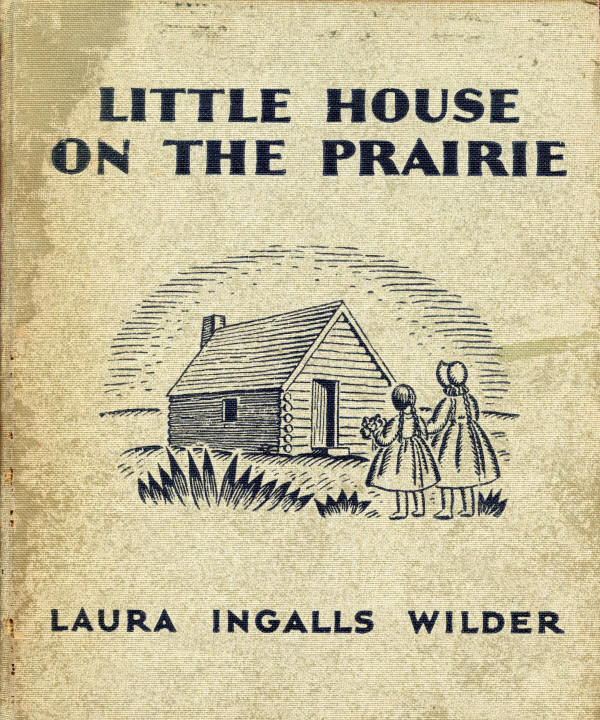
I didn’t realize then that I would grow to love American history. I read Laura Ingalls Wilder’s books, not realizing they were about history. The missing ingredient in the classroom was people. I needed someone to care about.

Laura’s books involved me in her family’s struggles as they settled in different places across America. She made history come alive for me.

When I write historical fiction, I always begin with a character, a person whose eyes I can tell the story through, a person a reader can care about. The story might be set against an actual event or maybe just an interesting time period. But it has to begin and end with a person.

My characters are fictional, but I try to breathe life into them. If I do that successfully, my readers will be able to live inside that character for the length of the story. They will hear the cannons at Gettysburg, smell the smoke after the Monongah mine explosion, or feel the excitement of a girl seeing an automobile for the first time.


That is why I write historical fiction. I want to transport a reader to a different time and place, to let them see through a character’s eyes, feel that character’s heartbeat. I want them to care enough so that history lives.

Thursday, May 3, 2012

HISTORY

Has the weather where you live been unusual this past year, maybe even bizarre? My husband recently showed me a magazine article about “The Year Weather Went Wild.” And it certainly has been a wild weather year here in Cincinnati, with record-blasting rainfall for 2011 and several days worth of record high temperatures for March, 2012, as well as three March hailstorms.

But the magazine article was in a “vintage” magazine—and the year was 1977, a year of blizzards, rainstorms, drought, heat waves, and crazy temperature swings. Wild weather is not new.
1977 edition of National Geographic with an article entitled, "The Year the Weather Went Wild."

I remember Cincinnati’s record low temperatures in January, 1977, records that still stand, and that we had a record 82 days straight where the temperature didn’t go above freezing. But I had forgotten about the other worldwide weather incidents the magazine mentioned.

It’s easy to forget things that caught our attention when they occurred, but have since been eclipsed by more recent happenings. Maybe that’s why I’m so fascinated by history, and why I write historical fiction.

We often read about people whose lives have been preserved because they were famous or infamous. Others passed down their stories. Laura Ingalls Wilder wrote books about her life and John Ransom kept a diary. But what about those millions of people, whose histories were not preserved—average people who lived everyday lives touched by what happened around them, stories that have faded with the memories of their descendants?

 By writing historical fiction, I can tell their stories. How can I do that without having known these people? That’s where the fiction part comes in. I research a time, a place, an event, the type of people who lived then, and the kinds of things they did. I research real people, and give my imagination freedom to create others who could have lived at the time and what might have happened to them. I often weave in oral family histories from my family or others, and add what I need to flesh out the people and the story.

 Digging into the past usually leads me to a treasure trove of incidents. If I tell people about one of them and they say, “I didn’t know that,” that’s a story I want to tell. Discovering history can shed a light on the past, illuminate the present, and make a brighter future.

Kathy Cannon Wiechman

Wednesday, April 25, 2012

FICTION OR NON-FICTION

     I write historical fiction, stories that are grounded in historical fact, but rooted in fictional people. Doing that requires a lot of research, which I enjoy, but it’s hard work, too.
     Someone advised me to use my research to write non-fiction as well, to get double return on my efforts. So I tried it a few times, and to be quite honest, I stink at it.
     I have been told that the strength in my writing comes from Voice, and for me, Voice comes from getting into a character’s head. When that character is or was a real person, I find the Voice becomes stilted because that head is already inhabited, and I am unable to get fully inside. It inhibits my creativity.
     But that’s me. I know lots of non-fiction writers who manage to write creatively, and I admire them. Many of them are more comfortable with non-fiction than fiction. It amazes me!
Connie Nordhielm Woolridge
Connie Nordhielm Wooldridge (whose books include PB Just Fine the Way They Are and biography The Brave Escape of Edith Wharton) says “I love writing non-fiction and I’ve tried straight fiction. But when I even think about historical fiction, all I can hear is ‘Lies! All lies!’”


Rosi Hollenbeck
     Rosi Hollenbeck (who writes both fiction and non-fiction, but considers herself primarily a fiction writer) believes that “breaking into book publishing is easier with non-fiction.”

Sandra Neil Wallace
     Sandra Neil Wallace (wife of Swagger’s own Rich Wallace and a talented writer herself) will have her second novel (The first was Little Joe.) out in the fall of 2013. Muckers is historical fiction, yet Sandra is currently working on a biography. She says about the biography, “It will require much research, but the good thing is I don’t then have to create a novel out of that research.” Check out Sandra at http://www.sandraneilwallace.com/

Mary Kay Carson
     Mary Kay Carson (whose latest work of non-fiction What Sank the World’s Biggest Ship? And Other Questions About the Titanic came out in April in time for the centennial anniversary of the sinking) says “To me, both are telling a story. With non-fiction, you have to use…your research to develop characters, bring scenes to life, and create plot-driving tension. With fiction, you can just use your imagination. That sounds easier, but it isn’t necessarily so! I sort of enjoy the challenge of working within the constraints of truth. It’s like the difference between using whatever you can find in your kitchen to come up with a decent dinner versus planning a dinner from scratch.”

     I find that writing historical fiction sort of falls in between the two. I have to do tons of research (which means reading a lot of non-fiction) about the time and place where my story occurs, and I am limited by that history in what I can and can’t write. But I have the freedom to let my character think what I want him or her to think.
     I plan to stick to fiction writing, but isn’t it great that we don’t all feel comfortable writing the same thing? And that we have all kinds of writers who write in different genres? It sure makes reading a lot more interesting.


Kathy Cannon Wiechman