Showing posts with label October Memoir and Backstory Blog Challenge. Show all posts

Thursday, October 25, 2012

What is a picture worth?

Today's post for the October Memoir and Backstory Blogfest Challenge is from Regina Gort.
 
My first Mother's Day, age 25


This picture was taken on Mother's Day when I was 25. What you can see in this picture is me toting around a little baby, my first child, Gwendolyn at 6 months old. What you can not see is that on my back I am carrying her toaster-sized feeding pump. You can not see the hours spent at the hospital, the devastation I felt when her diagnosis, cerebral palsy, was first spoken. You can not feel my heartbreak after her first surgery and her dire prognosis was discussed. 
What this picture portrays is a young mother bringing her infant into nature. 
And in this moment nothing else matters. 
 
The hours of therapy, the multiple surgeries, the grief carried and expectations lost are nowhere to be found. 
 
The purity, the innocence and love are reflected in the stream we are crossing.
 
And for me, I'd rather have this photograph than the 1000 words.

Monday, October 22, 2012

Open Letter to All Young Lovers


Today's post for age 22 of the October Memoir and Backstory Blog Challenge comes from Kim Van Sickler

I had every intention of writing a starry-eyed recollection of my wedding, at age 22. However, the sad reality is, I am so disgusted over continuing confrontations with my ex, more than a decade after my divorce, that I'd like to offer something much more meaningful. Please pass it along to all the young lovers in your life.

Open Letter to all Young Lovers

You are in love!  Congratulations! You know it will last forever! I hope you are right. But before you make what everyone hopes is a lifetime commitment, but is sadly that way for only half of us, take a moment to read the meanderings of someone who wished she'd done it all differently.

1. Human brains aren't fully developed until age 25. Since we haven't fully evolved into the person we will become, marrying before this age might mean the person you end up with down the road really is different from the one you fell in love with. And vice versa.

2. Make sure you've lived life before settling down. Take care of yourself for a little while. In this day and age, everyone needs to shake their sillies out (The Wiggles) before making a life-long commitment. What's the rush? Isn't it better to see what's out there first, before making that non-refundable purchase?

3. For those of you moaning, "I can't let him go! He's the love of my life! He might find someone else," I offer to you these sage words of advice from a poster that hung in my bedroom when I was younger, that sadly I did not follow. "If you love something, set it free, if it comes back to you, it's yours, if it doesn't, it never was."

4. Remember that the best relationship is one in which your love for each other exceeds your need for each other. (Dalai Lama) Your lives should be full when separate. If one lives to serve the other, that's a business relationship. If one wants the other to give up something meaningful, that's control, not love.

5. Be wary of certain qualities in your mate. If he/she likes to win at all costs, obsesses over past wrongs, and revels in never backing down--RUN AWAY. While this tenaciousness might be an admirable quality in certain business executives, it is not a desirable quality in a mate. If you end up divorcing someone like this, don't expect an easy time of it. If you end up having children with someone like this and divorcing them when the children are still minors, heaven help you.

6. Once you have children, the problems don't go away after the divorce. If your ex wants to play legal games with you, guess what? He/she can! You might get to return to court on a regular basis to argue some more about things like visitation and money. And even when you're not in court, your ex can use the children to mess with you in so many insidious ways. Then there are all of the kids' special events to look forward to. How do you work something like a high school or college graduation when the two of you can't even be in the same room together?

7. If you rush into marriage early, you might miss your true life partner when he/she comes along. If half of all marriages end in divorce, there's another percentage that turn down that road to Misery, Indifference, or Regret. People hanging out in those back alleys are in no position to find true love. They're messed up, damaged goods.

OK. Now I'm going to lighten up a bit. I do believe in true love. I found it the second time around. When you find that person you want to make yours forever, ask yourself two questions.

1. Is he/she a good listener? I mean a really good listener. Do they stop talking long enough to find out how you're doing? Do they unglue their eyes from the TV long enough to ask about your day, and engage in real conversation? And do they do this for you every day? Studies show that listening is the single most important quality a mate can have. Don't select a mate who doesn't listen. It won't last.

2. Does he/she respect you? You. The personality/brain/soul. Not, do you think he/she's sexy. Not, is your mate a good provider. Do you prefer talking to him/her more than just about anybody else? Do you turn to him/her for advice or help in making decisions? Do you care about each other enough to give and take so that the relationship isn't one-sided, but balanced?

If you can shout, "YES!" from the rooftops on these two, then a heartfelt CONGRATULATIONS. As long as you are over 25, have played the field a bit, don't cling, don't make demands, and don't marry a Neanderthal, you just might be one of those who make it! I'm rooting for you, because I'm a sucker for a good love story.

Sunday, October 21, 2012

Legendary


The post for age 21 in the October Memoir and Backstory Blog Challenge is by Jon Egan.
***

When I was a boy of fourteen, my father was so ignorant I could hardly stand to have the old man around. But when I got to be twenty-one, I was astonished at how much he had learned in seven years. 
~ Mark Twain

When this blog challenge started and we were asked to pick ages that we wanted to write about, I chose twenty-one thinking it would be easy. I didn’t give any thought to where in my life I was that year, to what was going on, to what relationship I was in, or to what I was even doing. I just figured it would be a no-brainer.

Twenty-First, normally equaled a big bash, a huge all in, three-day drunk, even though in Australia the legal drinking age was and still is eighteen, there was just something special about turning twenty-one.

I’d been looking forward to my twenty-first for years. I think I was probably seventeen or eighteen when I began imagining the party I was going to have, I had the food picked out; I had the bar set-up formed in my mind; I had the music and D.J. already selected; I knew all the pre-drinking tricks to use so I wouldn’t end up with a legendary hangover; it was destined to be huge, maybe even four days if my mates could hang in there.

Of course there’d be all manner of women, all the sheilas in town, and maybe even from neighboring towns would clamor to be on the invite list, they’d be dropping hints for invites, I’d have notes shoved under my door begging me to add them, they’d walk up to me in the street asking if they were indeed penciled in.

Legendary, that would be the word used to describe my twenty-first, yea legendary!

Aside from the party, there were other fantasies flashing through my mind. My old man, he and I weren’t that close when I was in my teens. Truth be told, we were never close in my younger years. The Coal Man's boy, that’s what he’d call me, sometimes with a grin, but usually not. “No son of mine,” was a constant phrase, uttered under his breath, or spoken with venom, sometimes yelled accompanied with a glare of hatred. But my twenty-first would change all that. He’d probably call me early in the day, wish me a grand birthday, offer me a fecking whiskey, and go on about how proud he was of me and my accomplishments…. He’d speak about how chuffed he was watching me play football, and he’d brag to the blokes at union meetings about my footy prowess. He’d tell me how he really always did love me, and only treated me the way he did so I’d grow up strong and be able to stand up for myself with my fists. “That’s the only reason I smacked you around a bit,” he’d say.

Yea, we’d have a good old chin wag before the party got started, he may even join in. All my mates, for the longest time, thought he was the best old bastard Irish man they’d ever met. They loved when he swung by  and sang a bunch of the old ballads, as he was apt to do when he’d had few. Legendary, yep no other word for it. Legendary.

Mum would for sure drop by too. She’d have the perfect card picked out--no present--I was never that big on presents, but a good card, that was always the best. Nothing like a good soppy card, even if the verse wasn’t hers, the words she added were always heart-warming, sincere, and never failed to bring a tear to my eye.

I kept the big bash alive in my head for so long, the anticipation was almost unbearable, I’d get butterflies when I thought about it. I wondered if my team mates would make me deliver a speech, just because they knew how much I hated public speaking. They’d get a kick out of that. So I practiced in front of my mirror: speaking out loud, laughing at my own jokes, even choreographing the way I moved as I spoke, thinking that not only was my party going to be, ya know, legendary, but my speech would be a highlight for all in attendance.

The year I turned twenty-one, I quit playing football, not by choice, but by injury, I blew my knee out and never recovered. Even if I had been able to play again, I was told by my specialists that my knee would never hold up to the strain, so I quit. I never did play competitive footy again, but it wasn’t so bad. I stopped going to games, hated watching from the sidelines, hated hearing people tell me how unlucky I was buggering up my knee the way I did. Funny but my dad never said any of that.

I was working the mines and driving truck the year I turned twenty-one. I had a room in SMQ, Single Men’s Quarters, C Block, a two-story building with about a hundred twenty 12 x 8 rooms, paper-thin walls, a bed, a desk with table light, and a small hanging area, two shower blocks on each level, tenants organized by the shift you worked, so afternoon-shift workers wouldn’t wake the night-shift blokes, stark white with aluminum foil on the windows, so not only wouldn't the light wake you, but it helped keep the heat down. There were lots of shift parties in the blocks, usually when you finished your 21st shift (3 blocks of days, 3 afternoons, and 3 nights), because we’d get a four-day break before going back on rotation. Those were some crazy, fight-filled events that always, always started out friendly, degraded into fighting, and then swung wildly back to friendly before the obligatory passing out.

My big day arrived. My family: all four siblings, and my mum and dad, lived less than ten minutes away. All of us ended up working in the mine, except my mum. We all worked different shifts, and we never saw as much of each other as you’d think. But this was my twenty-first birthday; they’d all make an appearance. I’d given up on the legendary party months ago, since I was scheduled to work the night shift, but I was still looking forward to seeing everyone. I was still like a kid on Christmas Eve. I felt like I was entering a whole new phase of life, and looking forward to the words of encouragement form my mates and family. I showered mid-morning to avoid the rush, and then I wandered over to the mess hall. It was weird sitting there at my table in a room of 70 tables by myself eating silently, trying to hurry so I could get back to my room before someone came by. The Romanian bloke that bussed tables smiled at me as he picked up my empty plate. I said G’day and he nodded back. I’d never heard him speak, except when he was with other blokes that worked in the mess. He had no clue it was my birthday. I downed the rest of my cuppa tea and hurried back to the block. I passed a few night-shift stragglers that were wandering the halls. We ignored each other.

I let myself into my room, and flipped on the radio. The announcer was spewing out the weather report, then went on to play a record without mentioning a thing about my birthday. I lay on my bed and listened to the music and waited. I waited all morning, and into early afternoon. No one knocked on my door. I got up and went for lunch, turning the sign on my door to “Quiet Please, Night Shift.” The Romanian had finished his shift, and a bloke from Scotland had taken his place. “It’s my twenty-first today,” I blurted out as he picked up my plate. He cocked his head sideways, “You done wi  tha cup, laddie?” He picked it up not waiting for an answer.

I went back to my room, locked the door, and climbed under the covers. I woke when my alarm went off at ten o’clock. Then I dressed in my usual bib-n-brace coveralls, pulled on my safety boots, sat on the edge of my bed and cried, before dragging myself to the bus stop to spend the night driving truck in a dusty, remote, iron ore mine, where no one cared what day it was.


Friday, October 19, 2012

MY LIFE AT NINETEEN


Today's 19 post for the October Memoir and Backstory Blog Challenge is written by Kathy Cannon Wiechman
 ***
Was your life at nineteen anything like mine? Were you young and foolish and thought you were grown up enough to make adult decisions?

When I was nineteen, boys my age were drafted into the army. They swore an oath to be willing to give their lives for their country.

We were all adults, right?

Two days after my nineteenth birthday, my boyfriend gave me an engagement ring. My parents were flabbergasted. They begged and pleaded with me to rethink this decision. What about your education? What about a career? (Career? I had a job, and that would get me through until I made it as a writer.) What if, gasp! you get pregnant?

I assured them I would not get pregnant. After all, the experts said diabetics had difficulty getting pregnant. Those experts also said diabetes would shorten my life. I wanted to marry Jim, and if I wasn’t going to have a long life, I was in a hurry to begin my life with him.

Jim and I had known each other since I was 13. We’d been good friends for years before we started dating. I had graduated high school at 17. I was smart. I knew what I wanted.

Two months after he gave me that ring, I became Jim’s wife. He was in the US Navy at the time, so he went back to base a week after our short honeymoon. My life hadn’t changed all that much, except I lived in a cute, little apartment instead of sharing a room with my sister in my parents’ home. I went to work during the day, and school in the evening.
Kathy Cannon becomes a Wiechman

Three weeks later, I flew to Great lakes, IL, for Jim’s graduation from boot camp. We were together the whole weekend, and I missed him terribly when I had to go home.

Unknowingly, I took a little extra something back home with me. I was pregnant. That’s right. Those experts who said it would be difficult weren’t so smart after all. Or was I the one who wasn’t so smart?

Jim and I decided I should quit my job after the semester and move to the Boston area where he was stationed. We lived in government housing, a small apartment where hot running water was fickle. My pre-natal appointments were at Chelsea Naval Hospital, and I was warned that a diabetic pregnancy would not be easy.

They were right. It was tough, but we got through it, and three weeks before my twentieth birthday, I gave birth to our premature first daughter. Today, Kelly is a wife and mother herself, and no, she didn’t get married at 19.
Kathy and Jim's first-born, Kelly.

Looking back at our wedding picture, I realize how very young we were (and Jim looks even younger in the picture than he really was. I swear I didn’t marry a 12-year-old.)

We were in no way ready for marriage and family. But we were both stubborn—and committed. We struggled through some rough times, but we’ve had wonderfully happy times, too. Yes, we’re still together, still friends, and our marriage is stronger than ever. Forgive me if this sounds sappy, but I love him more every day.

I still haven’t “made it” as a writer. Luckily I didn’t have to depend on it for a living. I worked at numerous jobs off and on while our family grew (including teaching, which made my mother happy), and Jim has been a good provider. We both grew up in frugal families, and that lifestyle worked for us, too.

The year I was nineteen was the ultimate life-changer, but I have never regretted being young and foolish.


Thursday, October 18, 2012

Becoming a Two-Footer


To illustrate age 18 for the October Memoir and Backstory Blogfest, Kim Van Sickler introduces you to the backstory of her main character's mother, Veronica.
(upper MG or maybe lower YA mermaid tale, Beached.)

***

Now that the time to leave her underwater kingdom is here, Veristycla wonders if she's making a terrible mistake. Yes, she's dreamt of swimming out of Tasnea, and stepping onto land with her very own pair of legs, ever since she could remember. The queen's whispered stories about two-footers, enhanced by growing up amidst two-footer detritus, and furtive spying missions on the surface, has sparked her love affair for everything Above the Sea.

What could it possibly be like to walk and move about upright? How would it feel to breath through a nose? Wouldn't it be fun to select the clothing to adorn her two-footer body?

Her mother's hand intertwines her own. They have arrived at the garish underwater home/hospital of Dr. Taddethal. The structure, a monument to recycling, is made up of chipped bricks and stones shoved in between sheets of aluminum siding, segments of ceramic tile, and deep-grooved sheet metal. The walls are high enough to house a whale. Comfortably. The entire amalgamation is fuzzy from a coating of seaweed.

The slender doctor has everything waiting for the transformation inside.

A practical jokester, Dr. Taddethal wears an oversized pair of lens-less glasses and a helmet today. His eyes soften when he looks at the princess. "You can still change your mind, you know. Everything we've done so far will unravel with time. But once you arrive on the surface, and apply the poultice to your face, there is no turning back."

Veristycla nods solemnly. "I understand. I'm ready."

But is she? Is it really her overwhelming desire to experience life as a two-footer, or just a convenient escape so she doesn't have to rule Tasnea? She tries to think objectively if she'd still be doing this if merkin law didn't mandate that the oldest child must assume the role of the father. With no way to bow out gracefully of a life of ruling others, she is destined for a life she doesn't want. And with a younger sister eager to assume the throne, leaving does seem to be the simplest solution.

The doctor gives her a final dose of medicine, masked in the seaweed flavor that accompanies most everything eaten in Tasnea. "I'll miss you, Princess." He bows slightly and offers up the satchel containing the poultices she'll need to apply on the surface. He'd offered to do it himself, but the queen wouldn't hear of it. She wants Taddethal to be able to say that he didn't assist in the transformative last step.

The queen and her daughter make their way through the cliff-side tunnel leading out of Tasnea, through the open water, and to the surface. Two palace guards escort them. Their journey is a quiet one. The queen has already spoken her mind, and given her reluctant blessing. Unspoken between them is the king's extreme reaction to his daughter's decision to leave.

"If she abandons her home, she is dead to us. All ties end the moment she reaches land." The king ran one hand through his chest-length beard and pounded his trident against the side of his coral throne with the other.

Father's pronouncement merely turned the reality of what she was doing into law. As a former mermaid, she could not physically travel to her underwater home again.

But she is eighteen pulsars old, and it's time to make her own life. And she knows her life is destined to take place Above the Sea.

The mermaids and their guards break the surface of the ocean to greet a frown of moon and a sky dripping with stars. The queen holds her breath and applies the salve to her daughter's face, to the area where a nose must grow. It's an excruciating process.

After the nose appears and the green goop is washed away, the queen grasps her oldest, her favorite, by the shoulders and looks deeply into her eyes. I will come here looking for you, the queen speaks with her mind. Return here often so I may rest assured that all is well.

Veristycla almost doesn't have the strength to pull away. Although the words had never been spoken between them, the daughter knows her mother wishes she could leave too. And Veristycla knows something else. That she won't venture out to sea to visit her mother. She knows it will be too dangerous. Better to allow memories of her to fade, and for her mother to move on.

The cool night air caresses her face as she swims towards shore. She knows what she must do: apply the poultices and grow legs. From her experience birthing a nose, she knows how painful this will likely be. She wishes her mother was here with her. But she's alone. Alone to forge a new life for herself, doing whatever it is she wants to do.

What have I done?

Wednesday, October 17, 2012

Seventeen


Today's post for the October Memoir and Backstory Blog Challenge is by Jon Egan

The dingo took my baby, she screamed for all to hear,
The Shuttle launched and landed, despite a nation's fear,
Walesa said, enough's, enough, Solidarity was formed,
John Lennon killed in NYC, the whole world sat and mourned.

Earthquake hits in Italy, near five thousand dead,
"Who shot J.R. Ewing?" is the question in my head,
Colonel Sanders left us, for the fryer in the sky,
Bobby Sands on hunger strike until the day he died,

Reagan wins election, the Hostages are free,
For fifteen hundred bucks, you can have your own PC,
Egypt’s Sadat is shot and killed, Bob Marley’s in the grave,
The CDC announces that five have died from AIDS.

Sandra Day O’Connor, first woman on the Court,
South Africa invades… and another war is fought,
MTV goes to air, and screens the Buggles first,
Pepsi dared to challenge Coke and won the nations thirst.

Video Killed the Radio Star

Lady Di got married to Charles the Prince of Wales,
Janet Cooke from Washington, got busted telling tales,
The Rubik’s cube distracted me, for seven days at least,
Ali said goodbye to being, the Butterfly and Beast.

The Oscar went to Chariots, but Raiders was the best,
Stephen King’s “Cujo,” had me putting down the rest,
Pink Floyd yelled at teachers, and put bricks into the Wall,
AC/DC’s “Back in Black” had Aussies standing tall.

These are just some memories from years and years ago,
Some changed our life immensely and some were just so-so,
I’m sure there’s some that you recall and some I shoulda seen,
But these are ones that meant the most when I was Seventeen.

Tuesday, October 16, 2012

Sixteen

Age 16 for the October Memoir and Backstory Challenge is written by Regina Gort

At Sixteen

I cut off my hair.
Long locks of 
obedience fell to 
the floor without reverence.

Not content to be
my father's daughter
at Bible study,
I went out on the town.

Rebellious he shouted,
certain my future
was damned.

But this, my first stand,
forged me. Samson braced
against crumbling columns,
without regret.

Strong is as strong does.

Defiant could no longer
define me, strength could.

Regina Gort at 16


Monday, October 15, 2012

STILL ME


Age 15 for the October Memoir and Backstory Challenge is written by Kathy Cannon Wiechman
***

When I think of being fifteen years old, I think of my last year of being truly carefree.

I went to lots of parties, and hosted plenty of them, too. They were informal things, where we ate chips and drank Pepsi, played records (yes, vinyl), and had fun. I dressed up and went to dances, dressed down and went to basketball games, dressed in red and went to Cincinnati Reds games. I hung out with my friends and walked to the local chili parlor, which served the best french fries EVER.

That’s when I was fifteen.

At sixteen, my world changed. I fell asleep in class on a daily basis, and had trouble staying awake to finish my homework. I had an insatiable thirst and was constantly hungry—but I didn’t gain weight.

The doctor’s diagnosis was Juvenile Onset Diabetes (now called Type 1 Diabetes). He said if I didn’t want to die, I would need to take insulin shots every day, closely monitor the exercise I got, and every bite I ate. I’d have to be careful of my eyes, my kidneys, and my feet. I was in the hospital for 12 days and heard horror stories of diabetics who went blind or had their feet and legs amputated.

When I came home, my carefree lifestyle had definitely changed. I always had to be aware of my sugar and insulin levels, take notice of any shaky feeling in my hands that might indicate a hypoglycemic reaction (blood sugar too low). I kept Lifesavers in my purse for emergencies.

Before I went to a dance or walked to meet my friends, I had to figure out how much “sugar” I’d walk/dance off, and if my blood sugar was high enough to handle it. I had to calculate my meals by “exchanges” and stick to what my last shot allowed.

It was tedious at first, but I got used to it. What was tougher was the way people treated me. In the beginning, my friends avoided going to the chili parlor when I was with them. They didn’t want to eat in front of me those things I was no longer allowed to have. In time, I convinced them that I didn’t mind watching them eat, that I just wanted them to treat me like that carefree 15-year-old.

Back in those days, we could buy Diet Pepsi at the grocery, but it wasn’t available at the chili parlor, most restaurants, the amusement park, or the ball park. I had to smuggle it in the same way the church ladies smuggled in their flasks of whiskey. My friends became co-conspirators.

Things had changed at home, too. Dad acted as though I were made of glass, asking me every five minutes if I felt OK. My siblings got blood tests since the role of genetics in diabetes caused concern. They were fine, but they treated me differently. I often ate different meals from what the others did. Mom was wise enough not to change their lives because mine had.

But I saw the way they looked at me, sometimes with pity, sometimes with resentment. I wanted things to be as they’d always been. I missed the teasing, the jabs, the “fights.” I didn’t like feeling different. I was still ME. Couldn’t they see that?

It took time.

Now there was a “Kathy drawer” in the bathroom for my testing supplies, a “Kathy cabinet” in the kitchen for my sugar-free snacks, and a second container of Kool-Aid in the fridge, one sweetened without sugar.

The containers were similar, so Mom warned my sibs to make sure mine stayed on the left, so I wouldn’t get confused and drink all that sugar by mistake. But when nine people reach into the same refrigerator multiple times a day, things get rearranged.

The day came when I didn’t know which was mine, and Mom warned them all again. The next day, a skull and crossbones had been magic-markered on my Tupperware container. It looked like my brother Bob’s work. And for some reason, that was the day I felt like ME again.
Smart-alek Bob's on Kathy's right.

Sunday, October 14, 2012

Tardun 14: A harvest story


Today's post on age 14 for the October Memoir and Backstory Blog Challenge is by Jon Egan.

Tardun, CBAS, St.Mary's, Christian Brothers, the Big House.... These were some of the other names that the "Tardun, Christian Brothers Agricultural School," was known by, and where I was remanded for three years. Yes I did say "remanded"  because that's truly what it felt like when I first arrived. Even though my parents paid for the privilege of me attending, it was highlighted in more than a few places on the application that this was a working farm school, and the boys would be expected to engage in very physical and demanding work regimes which would build character. (Oh, and please sign this part at the bottom of the sheet where it says that it's acceptable for the Brothers to engage in corporal punishment for the good of the child.)

Upper floor were the Dorms. Building on the right was the Chapel.

To be fair to my parents, they didn't have many choices for secondary education since we lived in the Australian bush and had no day schools nearby. They probably picked the cheapest alternative, and Tardun won.

Nearest town --- Tardun --- Population: 7 --- Distance from school: approx 10 kilometers
Nearest big town --- Mullewa --- Population: 200 --- Distance from school: approx 30 kilometers
Nearest city --- Geraldton --- Population: 20,000 --- Distance from school: approx 120 kilometers
Nearest capital city --- Perth --- Population: about 1 million --- Distance from school: light years...

Average temperature when I arrived in February: about 120 degrees --- Air Conditioning: what's that?
Average rainfall for the year: 2 inches (We were in the middle of the Wheat Belt of Western Australia, attempting to be self-sufficient by growing cereal crops and raising sheep and cattle.)
Student population: 100 boys, grades 8 through 10
Farm size: 70,000 acres
Teachers: 3
Farm bosses: 8
Jailers: 2
Hours per week spent in class:  about 20
Hours per week spent working the farm: about 40, except during plowing, seeding, harvesting, and shearing, then it bumped to about 80.
Fun and exciting life experiences looking back on my time there: priceless.

So, I said I was going to tell you about one particular event in my time there, and while I've been writing this I've changed my mind about a thousand times, but I've settled on this one.

As I mentioned, we were a cereal crop farm. We began harvesting around the beginning of October and went through late December, which was a pretty hot time of year in that part of the bush, pretty consistently over the 110-degree mark.

The system was, around 4 am we'd be awakened by a Brother carefully sneaking through the dormitory picking a few select kids to go out and spend the day working a harvester instead of being in school. You know how exciting that was to a 14-year-old, right? A day out of school AND we got to either drive the big rig collecting wheat from the harvesters or we operated the actual combines. They put a lot of trust in us.

This one particular morning, Brother Morgan, Swifty, (We had nicknames for all the Brothers and this bloke could run like the wind) came to my bunk and shook me awake, which was pretty easy since I was laying in a wad of sweat-soaked sheets, and had spent the night tossing and turning trying to get some shut eye.)

"Wake up Master Egan, we need you on a combine today, breakfast in 5 minutes."

"Yes, Brother."

 Me and about five other kids met down in the kitchen for our burnt toast and rubbery eggs. Seriously, the old cook, Joe, would prepare the fried eggs about an hour before we got there. He'd have them lined up on an aluminum tray, drop them and they'd bounce! After breaky we headed out in the bed of a ute (Aussie for pick up truck) to be dropped off at various machines in the paddocks. We got no choice when it came to what machines we were allocated, everything from vintage John Deere's to a brand new Massey Ferguson, which of course everyone wanted since it had an air-conditioned, air ride cab.


That day I didn't get the flash, shiny red Massey, I got the old piece of faded green John Deere: no air con, no air ride, no enclosed cab. But no worries. I was out of school, had about a 200-acre paddock of wheat to crop, and wouldn't see anyone but the grain truck for about four hours, 'til old Brother Synan (Goggles,) showed up with my frozen cheese and tomato sandwich. Yep, frozen, but it also came with a hot cuppa tea that you could dunk the frozen sarny (sandwich) in to defrost it enough to bite through.

So, I'm dropped off with my big water esky (cooler full of iced water) which I left strategically under the partial shade off an old gum tree and the ute pulled away. I checked that everything on the John Deere was where it was supposed to be, greased a few fittings,  and got to work cropping the paddock. By this time it's about 5:30 am. The sun's rising, the flies were out, and the engine hummed. Life was grand. I was already just two eye holes and a smile after being covered in dust from the ride out  in the back of the ute, and even though the sun just broke the horizon, I was fast becoming a muddy pile of red dirt.

First item of removed clothing: singlet (tank-top). It got laid across the back of what's left of the tractor seat.  I felt a little relief, although by then the open air cab caught and trapped all the heat it could from the engine, and as per usual there was not one wisp of air movement, except the flow of air idling through the cab as I moved at a snails pace. My arms were in constant motion as I lifted and lowered the comb on the front of the combine. Due to the drought conditions, the wheat stalks had barely reached a foot tall, so I had to watch for logs, and bundies (big rocks) that had been missed and disturbed during plowing and seeding season. The Brothers didn't like it when you dinged up the comb. They had no issue showing their displeasure with a swift smack to the jaw.


I'd been working for about an hour or so, and was now down to being shirtless, shortless and bootless. Boots were replaced with typical Aussie safety shoes, otherwise known as thongs, and I would have been barefoot, except the floor of the tractor was too hot for my feet to handle, so other than my undies, I'm pretty much naked. The grain truck had just been by to unload me, so I wouldn't see anyone for at least another hour. This was before the time of cell phones, and we didn't have CB's, so I was most definitely out there alone plodding around the paddock, covering a lap about every 15 minutes. I had to ration my water, so I'd stop and jump out for a drink every other lap, knowing that at lunch time they'd bring me a refill on my esky.

By about 10 am I was getting no relief from the heat even after guzzling down mouthfuls of by now, tepid water. The dust was caked on thicker than my mum's foundation, my eyes were raw from the layers of red dirt that were getting harder to clear with each blink. It was as if I were rubbing them with sandpaper. My once tighty whitey's were now dirt red, and chafing my thighs with every bounce of the piece of crap John Deere. Oh, how I wished I were sitting in the comparative cool of the 90-degree classroom! BUT! an idea sprang to my mind about half way through my next lap...

I eased the rampaging combine to a grinding, dust cloud-inducing, halt in the middle of the paddock, just across the way from my old pathetic non-shade covering ghost gum, and proceeded to trudge through the grain stalks in nothing but my undies and thongs. My legs looked like they got caught in a shrapnel attack, as the stalks ripped into the skin deeper than any of the canings I'd suffered at the hands of the Brothers. (Did I mention they enjoyed corporal punishment at this place?) I made it to the tree and the esky and proceeded to put my plan into action. It went something like this.

1. Remove mud-caked undies
2. Remove mud-caked safety boots, aka thongs
3. Remove 2-cup capacity cup from top of esky
4. Fill said cup with tepid cup from under-performing esky
5. Toss contents of cup high into air
6. Run naked through falling water thereby creating a cooling rain shower
Old esky
 It worked to perfection. Absolute and utter perfection. With the first cupful I was a little timid and didn't fully commit, but then with subsequent cups I became braver, my strength grew, and my abandon became absolute. I was giddy, nae, intoxicated with pleasure at being cool, so much so that I never noticed, honestly, didn't hear, see or in any way whatsoever notice that Brother Kelly (Roo Dog) had driven into my paddock and was watching from a distance of about a hundred yards as this naked, semi-delirious student/ farm hand/ inmate, danced like a banshee. Arms raised, legs pumping, hollering at the sky in a Native American kind of rain dance.
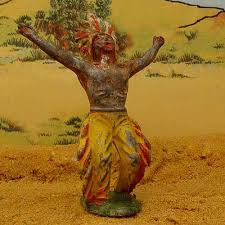

As God is my witness, when he actually pulled up next to me and I realized I was busted for naked rain dancing, I still don't know who was more scared. He looked at me. I looked at him. He nodded toward my undies and thongs. I stared at them. He nodded again. I walked over and sheepishly pulled them on. He nodded at the bed of the ute. I looked at him. He nodded again. I climbed in, burning my ass on the side of the bed in the process.

He drove me back to the school. No stopping at the still idling John Deere to get the rest of my clothes. Straight back to school in the back of the ute, even though there was a perfectly good seat in the front next to him. We pulled up in front of the main building and I didn't move. He still hadn't said a word to me. Then the bell rang for lunch, and out into the yard poured the 90 or so students that weren't working the farm that day. Roo Dog looked at me as he got out of the ute. I looked at him. He nodded toward the dorms. I didn't need another nod. I raced upstairs in my dirty mud-caked undies to the shower block.

Not a word was spoken to me regarding the incident from anyone other than the students, and surprisingly I was not called on for harvesting for the rest of the season. Never got my singlet back, but did get my boots returned to me! One time I was woken early by old Swifty a couple of weeks after that, but it was for bakery duty, not machinery operating, and do I have a great story about baking the weekly bread for the farm. But that's for another time.

Friday, October 12, 2012

Grandma's Gift

Today's  October Memoir and Backstory Challenge is age 12. Regina Gort shares a memory of a special gift.


Grandma's Gift

Came without 
wrapping,
no fuss,
a bound book of
lined, blank pages.

A soft green cover,
small, white, flower print.

I reveled the weight of
it, as I turned it over and
over in my hands.

Not fully aware of
the power she had
bequeathed, I thanked
her in a hug.

Once I found a moment with a
pen, I wrote my song,
no matter the key,
that I am still singing.

Regina Gort, age 12


Wednesday, October 10, 2012

Birds of a Feather

Today's  October Memoir and Backstory Challenge is age 10. Regina Gort shares a memory about an experience with nature.


Birds of a Feather

Lake laps the shore,
sun halo diamonds dance,
a call for me.

Awkward girl unsure
is made certain by
the water's calm.

First feet, then body, slip
below and I am a mermaid.
Reassured, this is
my world.

As I emerge, a Canada goose glides over me.
Flaps until her wingtips break
the water's surface and
lands.

I look at her.
She looks at me.
She has no flock.
Alone.

I dive.
She follows.
Back and forth I paddle,
she stays by my side.

The afternoon, our conversation.
The lake, our understanding.

And as I retreat to the beach,
she waddles behind me.
Overhead a flock honks
and she must go.

Left with a feather,
a reminder that this is
our place.
Regina Gort boating on Lake Superior


Tuesday, October 9, 2012

THE CHRISTMAS POEM


Our Age 9 post for the October Memoir and Backstory Challenge is by:
   Kathy Cannon Wiechman

I love Christmas time. I always have. Its music still evokes memories from my childhood and feelings of warmth that its Ohio weather doesn’t suggest.

Growing up, our home was filled with Christmas traditions, from the way we kids helped decorate the tree, to one evening set aside to ride around and look at Christmas lights, to the piece of birthday cake we left for Santa. (My brother Bob’s birthday was Christmas Eve.) For us, Christmas never seemed to be as much about receiving gifts as about being together.
Kathy Cannon

It would take pages, chapters, and books to write about all the Cannon Christmas traditions, but for this post I’ll tell about the one that began the Christmas I was nine.

That year, our own Miracle Baby was born. Mom had needed a hysterectomy the year before, but she’d postponed it when she learned she was pregnant. She was told she’d never carry the baby to term, but she did. And that Christmas, she wrote a poem and had copies printed to slip inside the numerous Christmas cards she mailed out. Between greetings to open the poem and good wishes to close it, she wrote about her family, she wrote about Us:

In February—straight from heaven—
Came Mary T., our number seven.
Such a blessing and so good,
Does everything an angel could.
In May came Mommy’s operation.
In June the only conversation
Was that week of cold and damp—
Bert’s first try at Boy Scout Camp.
But in July he won a free
Trip to Washington, D.C.
On Christmas Eve, our Bob will shout,
“Now I’m eleven and a scout!”
Pig-tailed Kathy in grade four
Writes poems and playlets by the score.
Patty’s seven, prim and dark.
In grade two she makes her mark.
Mischief Michael has turned shy.
He loves first grade but won’t say why.
Maureen, just four, would like to roam.
With five in school she’s bored at home.
Even Mommy’s never there.
She teaches second grade somewhere,
And takes three courses at U.C.
How busy can a family be?
Only Daddy is the same.
He should have a medal, fame.
Calm through all the noise and fuss,
He has to cope with all of us.

So many people commented on her poem that Mom wrote another the next year…and the next…and the next… For 35 consecutive years, she updated her Christmas card recipients on what we Cannons were up to—in verse. Not every mention was cute like that first year. She wrote about the deaths of our grandmothers (both died the same year), divorces, and my sister’s miscarriage.

The one tragedy she couldn’t put into verse was my father’s death. On the 36th year, instead of her poem, Mom wrote a short preamble and printed the poem I had written for Dad’s funeral.

For the next three years, she went back to writing about what each of us (and our families) had done that year, but in that 39th poem, she let the readers know it would be her last.

      For thirty-nine years, I’ve been writing this stuff
      And I think by this time it’s been quite enough.

And true to her word, for that 40th Christmas, she just sent cards. It turned out to be her last Christmas. She died in August, and on that first Christmas without her, six of us siblings received a poem written by the seventh, the youngest, that straight-from-heaven sister who inspired the first poem all those years before. Writing is also a family tradition.

Sunday, October 7, 2012

FAMILY VACATION


For age seven of the October Memoir and Backstory Blog Challenge:
 by Kathy Cannon Wiechman

By the time I was seven, my parents had six kids. We’d outgrown our old ‘53 Chevy, so Dad bought a 1956 station wagon, a two-toned job in colors that Chevrolet called Nile green and crocus yellow. It was big enough to take the whole family on vacation.

Dad was one of nine children, eight of whom survived to adulthood. They’d grown up in a small steel town about 150 miles upriver from our Cincinnati home. So when Dad said vacation, he meant a trip to Ironton, OH. I had been there before.
Kathy Cannon Wiechman waited until she was 16 before this pic was taken. 
The first trip I remember I was about three, and I got carsick on the way. I told them I was going to be sick, but before Dad could pull over, I puked all over myself. I remember standing by the side of the road while Mom stripped off all my clothes and put my pajamas on me, even though it wasn’t dark yet.

The year I was seven, Dad assured me—and Mom—that I would not be carsick in the smooth-riding station wagon. To be on the safe side, he took the river road, not the hilly route, and I was never carsick again.
It was the first of many Ironton trips we took in that wagon. Dad made a luggage carrier to fit on the roof, and painted it the same green as the car. We called it “the boat” because of the shape of its bow. In between trips, it was disassembled and fastened to the ceiling of the garage.

I can remember all us siblings standing in the yard to watch Dad put the boat together and struggle to fit the luggage we had piled on the lawn into it. Did Bob really need his saxophone? (He was supposed to practice every day.) Couldn’t Pat manage without her hair dryer for one week? (Not the compact item a hair dryer is today.) Dad lifted in suitcases, arranged and rearranged them, hauled them back out and began again.

When we were finally on the road, we played Car Bingo, where we marked X’s for things like signs, animals, a school, a church, and a cemetery. The Bingo cards were the kind you marked with a stylus and lifted a sheet to erase the X’s when the game was over. After a few years, the cards showed their age and tended to erase themselves.

On one trip, we had to stop and get a new distributor cap (something new to add to my vocabulary). On another, we had a flat tire. While Dad struggled not to cuss in front of us, we kids saw these as stories to tell our friends later.
Dad changing a flat.

Mom always packed a picnic lunch, and we stopped at a roadside park to eat PB&J. The park overlooked the river, and we loved to run down to the bank to toss in pebbles.

Our destination in Ironton was Grandma’s house, where we used to catch lightning bugs in jars along the earthen floodwall at the edge of the back yard. It had been built after the Flood of ‘37, which nearly destroyed the place. No, I’m not that old, but Dad and Grandma told us stories as we sat in her “nook”, a room off her kitchen just wide enough to fit a long table and benches. If you didn’t plan to sit for long, it was wise not to slide in first, because everyone else had to get up to let you out.

Some of Dad’s siblings still lived in Ironton, and there were scads of cousins for us to play with. Mom and Dad stayed at Grandma’s, and we kids got farmed out to whichever family had kids close in age. I learned the word alliteration in Ironton. Aunt Rita’s offspring were Judy, Janet, Jennifer, and Jim. Uncle Bill’s were Dave, Debbie, Danny, Darrell, and Diane.

At some point during each trip, we all met up at Lawco Lake for swimming, boating, and fishing. We had to cross Cannon Creek to get there, and we begged to take pictures by the sign that bore the family name, though nobody seemed to know for which Cannon it was named. (I finally got a picture taken when I was 16.)
Kathy rowing at Lawco Lake.

That year I was seven, I stayed on with Jennifer when the family piled into the wagon to head home. After a week, two of my aunts took me home on the train. A vacation and a train ride!

I remember those “family vacations” to Ironton with deep fondness. My friends told of trips to Pike’s Peak or Miami Beach, but I dare any of them to prove they had a better time.

Saturday, October 6, 2012

AGE SIX

Today's October Memoir and Backstory Blog Challenge is by Regina Gort


The Problem with Authority

First day of endless possibility
Playdoh, Dollhouse, Crayons.
A bit of guidance from our teacher,
"Please draw what you want to be when you grow up."

A few minutes of thought then
determined coloring onto construction paper.
Deliberate imagination captured
a portrait of me with a crown.

"Regina, please share with the class," she insisted.

A clear of the throat, a confident smile as
I revealed my masterpiece.
"The Queen of England," I said.

To which a harsh response was uttered,
"You can't be her. That's impossible."
A defiant stomp of my foot as I replied,
"I can be whoever I want, my momma told me so."

To the outer edge of
the classroom I was sent
where I pledged that
anything would be possible
and still is.
Regina Gort at age 6

Friday, October 5, 2012

Truth or Consequences

Today's post for the October Memoir and Backstory Blog Challenge is about age five.

by Kim Van Sickler

When I was five years old, I was OBSESSED with the television gag show Truth or Consequences, emceed by a young Bob Barker.

There was a period, before I understood what television programming meant, when I rushed home from afternoon kindergarten and planted myself in front of the TV with my coloring books, tuned to the station on which this show would air. In my five-year-old mind, the television executives might decide to run my favorite show at any time... and if I wasn't watching, I'd miss that night's gags.

http://www.youtube.com/watch?v=EkD1VgtrdP8

I have to say, that upon watching the above episode for this post, I winced at how bad it is. So bad, it's good. This was quality programming in the late 1960s.

Sometime during my fifth year or so, Truth or Consequences took to the road. It actually came to Cleveland, Ohio. Dad got tickets to a taping. We'd secured the right to sit in the studio audience and possibly appear on, in my youthful opinion, the best show of all time. I was so excited I thought I'd split a gut.

We had great seats. The show started, and Bob seemed to look right at me when he asked for a father/daughter volunteer. "Raise your hand, raise your hand!" Dad yelled at me. "What are you waiting for? This is your big chance. You love this show!"

But I froze. What if I got up there and made a total fool of myself? It was fun watching other people do it. I wasn't sure I wanted people laughing at me. I kept my hands in my lap, and Bob called three other father/daughter pairs to the stage.

I wouldn't be making a fool of myself that day. But Dad was incredibly disappointed in me, and I was disappointed in myself. Why didn't I go for it? The pairs on stage did have to do embarrassing things, but it was all in good fun, and I missed out on it.

I decided right then that I wouldn't make that mistake again. I would go for it. Five minutes afterwards, who will remember if I make a fool out of myself? And why should I care if they do? It was a transformative experience.

Kim at age five.

Thursday, October 4, 2012

AGE FOUR


Today's October Memoir and Backstory Blog Challenge is by
 Kathy Cannon Wiechman

The year I was four was a year of firsts for me.

I started kindergarten. I was younger than the other kids, but I was a precocious little brat and the kindergarten had gotten a recommendation from my nursery school teacher—my mother.

I’d been in school as far back as the womb. Mom ran a nursery school in our home, a home much different from friends’ homes. No carpeted living room with a sofa and chairs, but a playroom with linoleum floors and lots of books, puzzles, toys, and Highlights magazines. There was a “cot box” where naptime cots were folded and stored, and cubbies, which Mom called “lockers,” where the kids kept their jackets and boots. (My father made the cot box and cubbies.)

The dining room had kid-sized tables with tops that came off to reveal toy roads or peg boards. The back yard had a huge concrete sandbox, monkey bars, a slide, and an industrial-sized swing set. (Dad made those, too.)

So kindergarten wasn’t my first school experience, but it was the first time my mom wasn’t there.
Another first that year was ballet lessons. Mom thought it would make me more graceful. It didn’t work. I took ballet for four years, but I was a natural klutz. Still am.

I loved the pink tutu I wore for the recital and the ruffled pink parasol I twirled. I wore it again for Halloween, but October 31st was cold and Mom made me wear pink pajamas underneath. I was humiliated.

That year was also my first real vacation, a trip to Michigan with my friend Lynn and her parents. Lynn was an “only child,” a totally foreign concept to me. At that point, I was the middle child of five, and our family eventually added two more.

Lynn’s family was interesting. Her house had a freezer in the basement that always had Popsicles in it. And Lynn’s mom was an illustrator. I had never given any thought to the people who created the pictures in all those books on our shelves at home.

That Michigan trip was full of firsts: my first time staying in a cabin on a lake, my first time swimming in water that wasn’t in a pool, my first experience with no indoor bathroom, and my first extended stay away from home.

I don’t remember missing my parents or siblings, but I know I did. I do remember getting hysterical when I had to use the bathroom in the middle of the night, when the outhouse was dark and spooky. I was certain girl-eating bears lurked nearby. After that, Lynn’s Mom gave us a container to use in our room at night.

I remember swimming every day and going out in the boat with Lynn and her parents. One day, the outboard motor got stuck in sand when we rowed too close to an island to get a closer look at a fawn on shore. Lynn panicked and thought we would be stuck forever…or sink, but I was curious about the fawn and wondered how it came to be on an island and where its mother was.

We watched Lynn’s mother water ski, gracefully skimming along the water’s surface. Lynn and I used what they called a “surfboard” even though it wasn’t for use in the surf, but towed behind the boat. I remember getting a face full of water on our first attempt, but it was fun after we got the hang of it.

I also remember the long car ride each way. There was a bag of toys in the back seat to keep me and Lynn occupied. My favorite was a lift-the-flap book, another first. With all the books in our nursery school at home, I’d never seen one with flaps. I must have gone through it a hundred times. I don’t recall what my reading ability was at age four, so I likely stumbled over words, but I loved lifting each of those flaps to discover a picture underneath. Even on the hundredth time.

All these years later, those memories are as vivid as ever. I’m still a klutz, but I remember ballet’s five positions. I love lakes and boat rides. I can tolerate outhouses, but I still don’t like them at night. And when I love a book, I’ll read it over and over, happy to rediscover its secrets, with or without flaps.

Wednesday, October 3, 2012

Blue Tail Fly


Here's our age three memory for the October Memoir and Backstory Blog Challenge:

by Kim Van Sickler

Wash day. One of Clay's favorites. Ruby tied one end of the rope to Clay's waist and the other end to the removable wooden post in the middle of the top deck. She gave him a metal bucket filled with tepid water, a scrub brush with splayed bristles, and a raggedy white shirt.

Three-year-old Clay knew it wouldn't do to sit idly by while everyone else was working so hard. He mimicked the woman who was the closest thing to a mama he had. Scrub, scrub, scrub. Rinse. Squeeze.

The difference was Ruby washed lots more than one shirt. And after she squeezed the water out of them, she hung them on another rope that stretched from stem to stern on their canal boat.

The strains of Clay's newest favorite song floated over from the towpath, where Owen guided the mules. Clay sang along at the top of his lungs.

When I was young, I used to wait
on Master and hand him his plate
Pass down the bottle when he got dry
And brush away the blue-tail fly...

The booming voice from the tiller shut Clay up fast. "If it ain't bad enough that my son sings all the live-long time, I gotta put up with this orphan stripping my ear drums too?"

Desperate to please the prickly owner of River Phoenix, Clay held up his limp shirt. "Ruby and I are washing!"

"You're making an infernal racket, that's what you're doing!"

Clay pinched himself so he'd remember to stop being so loud.

"Look alive up there, Loomis," Captain Seamus shouted toward the bow.

Clay saw they were approaching a lock. He couldn't wait until he was old enough to do men's work like running the boat. He knew what everyone needed to do to get the boat through, but he always watched anyway.

Loomis threw a rope around the snubbing post and jumped onto the wooden beam attached to the swinging doors. Grasping a beam and pulling hard at it, he opened the gate, then jumped back aboard River Phoenix. Seamus tilled the boat in, always yelling at Loomis to push here and there to keep the boat from hitting the sandstone walls of the lock. Once the boat was inside, Loomis jumped back onto the lock to push the doors closed and opened the paddle gates, letting the water rush in to raise the boat or out to lower it, depending on whether they were going upstream or downstream. Meanwhile, Owen unhitched the mules and walked them to the far side of the lock to re-hitch them after the boat came through.

While Owen waited for the boat, he kept right on singing. Clay knew better than to join in again so soon after being yelled at. He just listened.

Jim Crack corn and I don't care
Jim Crack corn and I don't care.
The master's gone away 

"Owen, if it weren't for the way your caterwauling calms those mules, I'd a shut you up long ago."

"Yessir, they sure do like it, Cap'n," Owen paused long enough to say.

Clay wasn't sure, but he thought he saw Owen wink up at him.
_____________
Memory of 12-year-old orphan muleskinner Clay from an HF WIP with fantasy elements, set in 1844 on the Ohio-Erie canal.


Tuesday, October 2, 2012

Terrible Two's


Today's post for the October Memoir and Backstory Blog Challenge features age 2.

by Jon Egan

Two years old and full of ‘tude,
Diaper changes, runnin nude,
Won’t eat anything made with Luv,
Instead I’ll scarf the worms and bugs.

I’ll stomp my feet, won’t wear my shoes,
I’ll hold my breath, until I’m blue,
I’ll kick and scream ‘n won’t lie down,
I’ll make the biggest stink in town.
 
But, when my dad’s around the home,
I’ll be the bestest kid you know,
I hear my mum, she’s tellin tales,
But, he’ll never see my two-year wails.

Once he’s out that locked front door,
I’ll kick it up and scream some more,
So drop that candy for my bribe,
Perhaps I’ll let you rest for five.

Eventually I’ll lay my head,
And snooze away tucked up in bed,
Yes I hear you through your teeth,
“He’s so damn cute when he’s asleep.”
 
I’m typical… In fact, you see?
Two year olds are meant to be,
Nothing but trouble so you’ll agree
The Terrible Two’s… are the worst you’ll see