Tuesday, April 22, 2014

S is for SULTANA

 by Kathy Cannon Wiechman

(Kathy’s A to Z posts are tidbits of fact gleaned from her research for her historical-fiction novel LIKE A RIVER.)

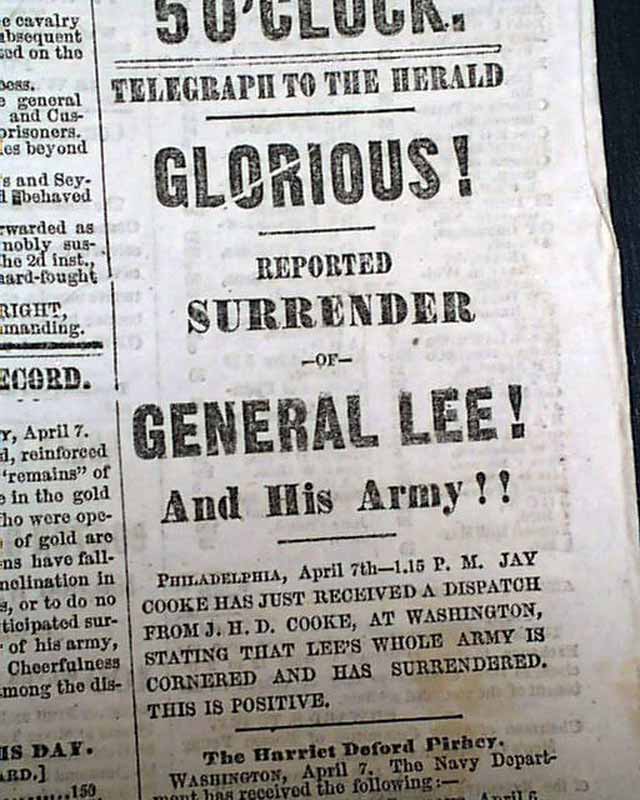
As the Civil War neared an end, the Confederacy moved prisoners from Andersonville and released them into Union hands. After Lee’s surrender, those men and released prisoners from Alabama’s Cahaba Prison were loaded onto the steamboat Sultana to be sent north. At long last, the horror was over—or so they thought.

The Sultana was built to carry 376 passengers and a crew of 85. After civilian passengers had boarded, the released prisoners were loaded onto the decks until the weight of the men caused the floors to sag. Posts were brought in to shore up the floor, and more men boarded.
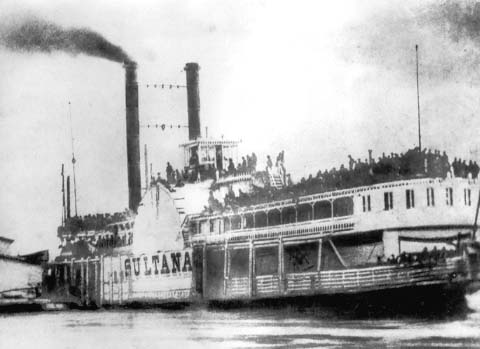
The U.S. government paid steamboat lines for each soldier they carried, which provided incentive to carry as many as possible. The final number was around 2,500.

Around 2:00 AM on April 27, 1865, the boat’s boilers exploded. The explosion, its fire, the boilers’ scalding water, and drowning in the Mississippi killed nearly 1,800—more than would die on the Titanic fifty years later.

After hearing those staggering numbers, I wondered why I had never previously heard about the Sultana (which was built in my home city of Cincinnati). The news in April, 1865, announced the end of the bloodiest war in U.S. history, the assassination of President Lincoln, and the search for and death of assassin John Wilkes Booth. The deaths on the Sultana just weren’t considered the most important news of the day. It was a story I had to write.

Monday, April 21, 2014

R is for RATIONS

by Kathy Cannon Wiechman

(Kathy’s A to Z posts are tidbits of fact gleaned from her research for her historical-fiction novel LIKE A RIVER.)

In the early days of Andersonville Prison, rations for the prisoners were meager. At first, cornmeal and meat were doled out, but since cooking utensils and firewood were scarce, many had no way to cook the meat or bake bread from the meal. A cookhouse was set up, but as new prisoners were brought in, some days only half the camp was fed.

Eventually, large slabs of cornbread were baked and brought into the camp once a day. Sometimes bacon was also given out. However, flies that landed in the bread dough were baked into the bread. Many times, cob was ground up with the corn and baked into this daily ration. It caused severe inflammation in the prisoners’ stomachs.
cornbread
As Union troops invaded the South, destroying crops and burning warehouses, food became scarce for Confederate soldiers and Southern civilians. Prisoners’ daily ration of cornbread became smaller and smaller. Scurvy (caused by malnutrition) was rampant, and many starved to death.

Overall, military rations during the Civil War were lacking. Hardtack was the go-to when other rations grew scarce. Hardtack was a hard, cracker-like biscuit, and it was not uncommon to find it infested with insects. I saw a piece of hardtack (vaguely resembling a Pop-Tart) in a museum in 1996. It had survived since the Civil War.
two different styles of hardtack

But military rations have never been something to rave about. My USMC son showed me the MRE’s (Meals-Ready-to-Eat) they eat in the field. Military life still isn’t easy.

Saturday, April 19, 2014

Q is for Quin O'Toole

by Kim Van Sickler

[Kim's posts will all relate to her MG historical fiction novel with a paranormal twist: Muleskinner. Here's the pitch: An extraordinary canal dog gives twelve-year-old mule driver, Clay, the conviction to fight against a highly suspect Indenture agreement his pa supposedly signed...right before Pa was found swinging from a tree above Lonesome Lock.]

Quin O'Toole. Nickname: Goose
Quin is already dead when Muleskinner starts. He was a canaler married to the prettiest woman on the Ohio Canal before she died birthing their second child: Aidan. A happy go-lucky fellow by nature, his fortunes took a dramatic turn for the worse when he got ensnared in Slice Fermer's gambling enterprise. Before his body was found hanging over Lonesome Lock, an indentured servitude agreement had been signed, promising his son Aidan would work for Slice as his muleskinner when the boy turned ten years old.

Quin's unfortunate past haunts Clay. It's up to Clay to straighten out what his father fell victim to and set himself free. 

Friday, April 18, 2014

P is for PROVIDENCE SPRING

by Kathy Cannon Wiechman

(Kathy’s A to Z posts are tidbits of fact gleaned from her research for her historical-fiction novel LIKE A RIVER.)

When Andersonville prison camp was first constructed, it contained a branch of Sweetwater Creek. That creek was to be used by the prisoners for their every need: drinking, bathing, washing clothes and cooking utensils—and waste.

Wood “sinks” were built along one edge of the creek for men to empty their bowels directly into what was also the source of their drinking water. Before long, the stream became a contaminated, foul-smelling swamp that attracted flies by day and mosquitoes at night. The diseases spread throughout the camp from this creek were innumerable.

In August, 1864, a torrential downpour flooded the creek, which made matters worse—for a time.

When the flood water receded, it revealed a spring which bubbled from an underground aquifer too deep to have been contaminated by the stream. The prisoners proclaimed the water was clean and tasted sweeter than any water they had tasted in a long time.

But the spring sat on the wrong side of the dead line (see post for D). After contriving ways to reach the water with buckets tied to poles, some prisoners felt clean water was worth risking their lives for. Eventually, they were allowed to dig a reservoir for the spring to flow into, and men could drink clean water without fear of being shot.


The spring, which many attributed to a divine hand, was named Providence Spring. It still flows at the site of the prison. However the water is no longer safe to drink.

Thursday, April 17, 2014

O is for Ohio Canal

by Kim Van Sickler

[Kim's posts will all relate to her MG historical fiction novel with a paranormal twist: Muleskinner. Here's the pitch: An extraordinary canal dog gives twelve-year-old mule driver, Clay, the conviction to fight against a highly suspect Indenture agreement his pa supposedly signed...right before Pa was found swinging from a tree above Lonesome Lock.]

In 1825 the Ohio legislature authorized the construction of the Ohio Canal (now known as the Ohio & Erie Canal). The idea originated from the new and prospering Erie Canal running through NY and PA. Goods would arrive via Lake Erie to Cleveland and get shipped south through the length of Ohio to Portsmouth, a distance of a little over 300 miles. Raw materials like coal, quarry stone, and crops would be shipped back north. Thanks to the canal, Cleveland and Akron, little nothing towns, blossomed. The Canal era petered out in 1913 with the Great Flood, the nail in the coffin of a dying transportation industry, thanks to the faster, more efficient railroads.

The earliest known photo of the Ohio Canal, taken circa 1859 in the East Flats section of Cleveland.

Wednesday, April 16, 2014

N is for Nicknames

by Kim Van Sickler

[Kim's posts will all relate to her MG historical fiction novel with a paranormal twist: Muleskinner. Here's the pitch: An extraordinary canal dog gives twelve-year-old mule driver, Clay, the conviction to fight against a highly suspect Indenture agreement his pa supposedly signed...right before Pa was found swinging from a tree above Lonesome Lock.]

Canalers and places on the Ohio Canal frequently developed nicknames. For instance Captain Pearl Nye, a canaler who later wrote and performed stories and songs about life on The Silver Ribbon (nickname for the Ohio Canal), was known as Skinny. The locks the canal boats passed through developed their own colorful nicknames as well. Some of my favorites that I worked into Muleskinner are: Lonesome Lock, Black Dog Crossing, Johnny Cake Lock, and Whiskey Lock.
A dapper man standing near a waterfront.
Captain Pearl Nye, nicknamed Skinny
Lonesome Lock circa 1892
Many of my Muleskinner characters have nicknames as well. Clay, my muleskinner (slang for a mule driver) is Bird, a name he was given that he hopes refers to how he sings rather than, as he suspects, his scrawny build. Gloomy and dark Cap'n Loomis Sheridan was nicknamed Mossy by his younger brother, Owen. The name derives from a shortening of the slang term moss-backed, which meant drunk. Owen never calls Cap'n Mossy to his face, however. And Cap'n Sheridan refers to his bushy-haired younger brother Owen, the bowman, as Whiskers, when he's irritated with him. 

I embraced the nickname culture when writing Muleskinner. I couldn't resist!

Tuesday, April 15, 2014

M is for Muleskinner

by Kim Van Sickler

[Kim's posts will all relate to her MG historical fiction novel with a paranormal twist: Muleskinner. Here's the pitch: An extraordinary canal dog gives twelve-year-old mule driver, Clay, the conviction to fight against a highly suspect Indenture agreement his pa supposedly signed...right before Pa was found swinging from a tree above Lonesome Lock.]

A muleskinner is a person who drives mules. Back in the Ohio Canal era (1825-1913) a team of 2-3 mules were hitched in tandem (one behind the other) to pull canal boats (freighters) filled with supplies from any combination of distances between Portsmouth (south) to Cleveland (north), about 310 miles. 

Muleskinner walking beside his mules
 In my book Muleskinner, Clay has been helping drive mules for the freighter Bonnie Lass for six years already. At twelve years old, he is now a seasoned mule driver. He spends all day on his feet tending to the mules or walking with them. His biggest concerns are the condition of the mules, the weather, and the waits to lock through at the areas where the water level has to be either raised or lowered so boats can proceed either upstream or downstream. It's a physically grueling, frequently boring, oftentimes dangerous life. 

Did you know that President James Garfield worked as a muleskinner on the Ohio Canal? After he fell in the water for the 14th time, he developed a malaria-like sickness (referred to as the ague) that forced him to retire from the canals. His quality of life drastically improved once he did!